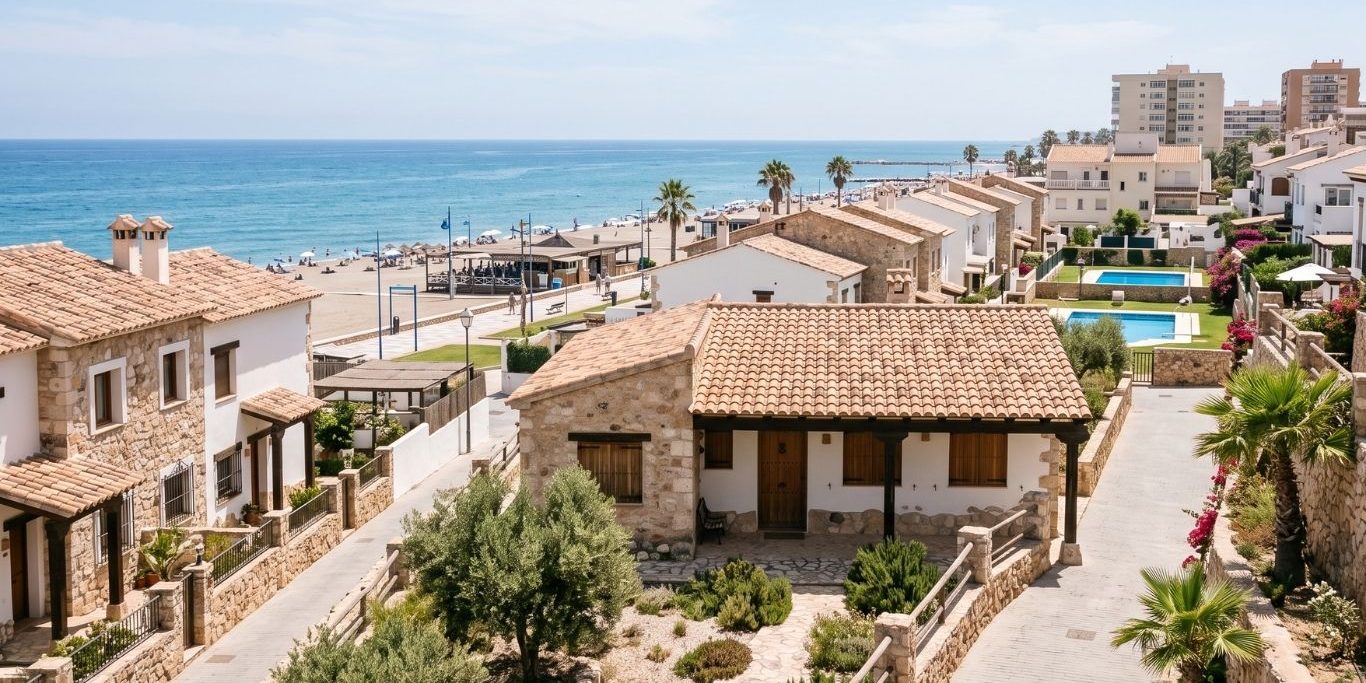
Owning a holiday home in Spain is a dream for many people. Whether it’s an apartment by the coast, a villa on the Costa del Sol or a countryside retreat, these properties often remain empty for much of the year and are only occupied during the summer months.
While this lifestyle offers flexibility and enjoyment, it also creates a common challenge: paying for an electricity contract that is designed for year-round use, even though the property is only occupied for a few weeks or months.
Many homeowners continue paying unnecessary fixed electricity charges simply because they have never reviewed their contract. Others assume that disconnecting the electricity supply is the only way to save money, without realising that there are often better alternatives.
Choosing the right electricity plan for a seasonal property can help reduce annual costs while ensuring your home is ready whenever you arrive. Understanding how Spanish electricity contracts work is the first step towards finding the most suitable solution.
Why holiday homes require a different electricity strategy
A primary residence and a holiday home rarely have the same energy consumption profile.
In a permanent home, electricity is used consistently throughout the year. Heating, cooling, cooking, lighting and appliances contribute to relatively stable consumption over twelve months. A summer property, however, may remain almost unused for most of the year before experiencing a sharp increase in consumption during holidays.
This difference means that an electricity contract suitable for a permanent residence may not be the most cost-effective option for a seasonal property. Instead of focusing only on the price per kilowatt-hour, homeowners should also consider the fixed charges they pay even when no electricity is being used.
Understanding fixed and variable electricity costs
Spanish electricity bills contain two main components. The first is the fixed charge, which is largely determined by the contracted power (potencia contratada). This amount is payable every day, regardless of whether anyone is living in the property. And the second is the variable energy charge, based on the electricity actually consumed. For homes that remain empty during most of the year, fixed costs often represent a significant proportion of the annual electricity bill.
Reducing unnecessary fixed charges can sometimes generate greater savings than focusing solely on the unit price of electricity.
Is a fixed-price or indexed tariff better?
Many holiday homeowners assume that a fixed-price tariff is always the safest option. However, for properties that remain empty for much of the year, an indexed tariff is often worth considering.
An indexed tariff follows the wholesale electricity market, so the price of energy changes over time. While this means prices can fluctuate, these tariffs often come with lower contracted power charges than many fixed-price plans. Because holiday homes usually consume very little electricity outside the summer season, reducing fixed annual costs can have a greater impact than securing a fixed energy price.
Another advantage is flexibility. Most indexed tariffs do not include early termination penalties, allowing homeowners to switch to another tariff if their circumstances change or a more suitable option becomes available. By contrast, some fixed-price contracts include exit fees or minimum commitment periods.
That said, the best option always depends on how the property is used, expected consumption and the homeowner’s preference for price certainty. A professional review can help determine which tariff offers the greatest overall savings.
Why contracted power is often too high
One of the most common issues found in holiday homes is excessive contracted power. Many properties still have the same electrical capacity that was selected years ago, even though the way the home is used has changed considerably.
Contracted power determines how much electricity can be used simultaneously before the electrical protection system disconnects the supply.
A property occupied only occasionally may not need the same capacity as a permanently occupied family home. Reviewing contracted power can therefore be one of the simplest ways to reduce annual electricity costs without affecting everyday comfort.
However, any reduction should be based on a technical assessment to ensure that all essential appliances can still operate safely when the property is occupied.
Should you disconnect the electricity supply completely?
Some homeowners consider cancelling their electricity contract during the months when the property is empty. While this may seem like an effective way to avoid fixed charges, it is not usually the best solution.
Disconnecting the supply means that electricity will not be available when you return unless a new activation process is completed. Depending on the circumstances, reconnecting the supply may involve administrative procedures, waiting times and additional costs.
Furthermore, many holiday homes benefit from having a small amount of electricity available throughout the year. Security systems, internet routers, automatic gates, swimming pool equipment or humidity control systems often require a permanent electricity supply even when nobody is living in the property.
For most homeowners, optimising the electricity contract is a more practical solution than disconnecting the property entirely.
Choosing an electricity plan if you have a swimming pool
Swimming pools can significantly increase electricity consumption during the summer. Filtration pumps, pool lighting and automatic cleaning systems often operate for several hours each day.
If your property includes a swimming pool, it is worth reviewing when this equipment operates. Programming filtration systems to run during lower-cost tariff periods, where appropriate, may help reduce energy costs without affecting water quality.
Energy-efficient pumps and smart timers can also contribute to lower annual electricity consumption.
Air conditioning has a major impact on summer bills
For many holiday homes in Spain, air conditioning becomes the largest source of electricity consumption during the hottest months. Modern inverter air conditioning systems are generally far more efficient than older equipment, but usage habits still play an important role.
Improving insulation, closing shutters during the hottest part of the day and maintaining air conditioning equipment regularly can help reduce energy consumption while maintaining indoor comfort.
Choosing an appropriate electricity plan should therefore be considered alongside wider energy efficiency measures.
Solar panels can make a holiday home even more efficient
Spain enjoys one of the highest levels of solar radiation in Europe, making residential solar panels an attractive option for many second-home owners. Although holiday homes are not occupied all year, solar panels can still provide significant benefits.
During the summer, when electricity consumption is highest, solar production is also at its peak. This allows homeowners to generate a larger proportion of the electricity they consume directly from sunlight.
Even when the property is empty, any excess electricity generated may be compensated depending on the chosen electricity contract and applicable self-consumption arrangements.
For homeowners planning long-term investments, combining an optimised electricity tariff with solar self-consumption can reduce both electricity costs and dependence on the grid.
Don’t overlook your electricity contract
Many people spend time comparing accommodation costs, insurance or property taxes but never review their electricity contract. However, a contract that was appropriate several years ago may no longer match how the property is used today.
Changes in household occupancy, new appliances, electric vehicle charging or solar panel installations can all affect which tariff is most suitable. Reviewing your contract periodically ensures that you are not paying for services or capacity that you no longer need.
Professional advice can help avoid unnecessary costs
Electricity contracts in Spain include several technical elements that are unfamiliar to many foreign homeowners. Contracted power, regulated charges, tariff structures and supplier options can all influence the final cost of electricity.
Rather than focusing only on finding the cheapest advertised price, a professional review considers how the property is actually used. This often reveals opportunities to reduce annual costs without changing daily habits or sacrificing comfort.
Can you change your tariff during the year?
In Spain, changing your electricity tariff is generally straightforward and, in most cases, can be done without additional charges. This gives holiday homeowners greater flexibility to adapt their contract as their needs change.
For example, some owners prefer to keep an indexed tariff during the months when the property is empty, benefiting from lower fixed costs and greater flexibility. Before the summer season, they may decide to switch to a competitive fixed-price tariff without a long-term commitment if they prefer greater price certainty during periods of higher consumption.
Although this is not the most common approach, it illustrates why reviewing your electricity contract regularly can help ensure you always have the most suitable tariff for your property.
Conclusion
For many holiday homes, an indexed tariff combined with correctly optimised contracted power often provides the best balance between low annual costs and flexibility. However, every property is different, so the most suitable solution should always be based on how the home is actually used. Every holiday home has different energy needs depending on occupancy, appliances, air conditioning, swimming pools and future plans such as solar panels or electric vehicle charging.
Reviewing your electricity contract regularly helps ensure that your property remains both comfortable and cost-efficient, allowing you to enjoy your time in Spain without paying more than necessary throughout the rest of the year.
If you own a holiday home in Spain and want to reduce your electricity costs, Evergreen Eléctrica can help. We analyse your property’s energy usage, review your electricity contract and recommend the most suitable tariff and contracted power for the way you actually use your home. With clear advice and personalised support, we make managing your Spanish electricity supply simple and stress-free.
Want to know which plan is best for your home? Fill out this form and we’ll let you know—free of charge.