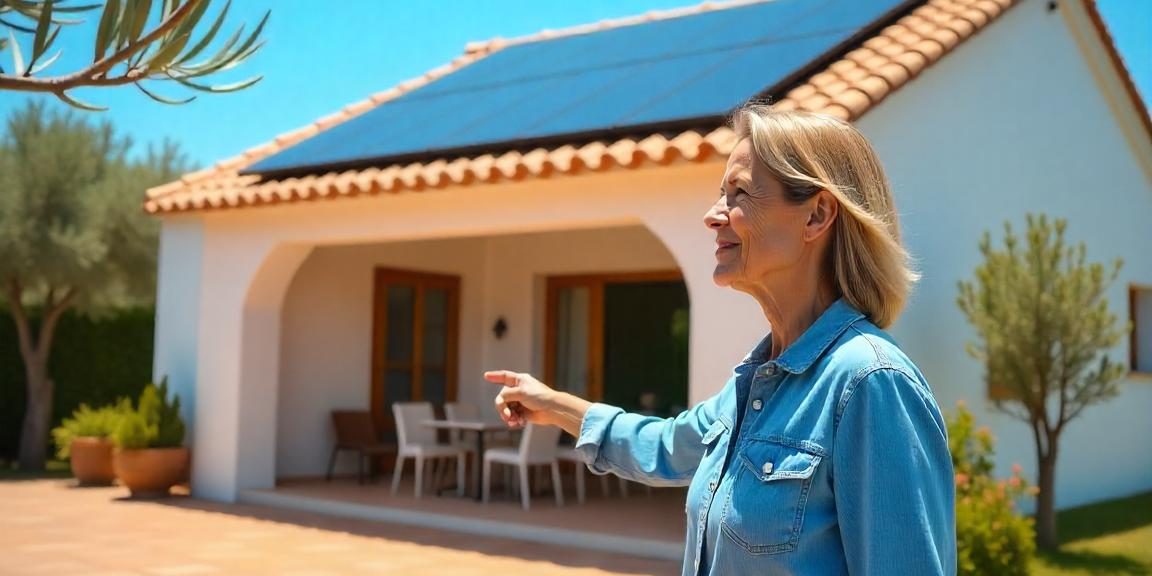
If you’re considering installing solar panels in Spain, one of the first questions you may have is: do you need planning permission for solar panels in Spain? The short answer is: not always, but some form of administrative procedure may still be required.
In Spain, the requirements for installing solar panels depend on factors such as the autonomous community, municipality, type of property, location of the panels and characteristics of the installation.
Many straightforward rooftop photovoltaic installations on existing homes may be processed through simplified procedures such as a declaración responsable (responsible declaration) or comunicación previa (prior notification), rather than a traditional building licence. However, this does not mean that solar panels can simply be installed without checking the applicable requirements.
There are also separate technical and electrical procedures for legalising a self-consumption installation. Understanding the difference is particularly important for international homeowners, as the Spanish administrative system does not correspond exactly to the concept of planning permission used in countries such as the UK.
What Does Spanish Law Say About Solar Panels?
There is no single nationwide rule stating that every residential solar installation either requires or does not require traditional planning permission.
Spain has a national regulatory framework for electricity self-consumption, including Royal Decree 244/2019, but building and urban-planning procedures can also depend on autonomous-community legislation and municipal regulations.
According to guidance published by Spain’s Instituto para la Diversificación y Ahorro de la Energía (Institute for Energy Diversification and Saving) or IDAE, building work will generally be subject to one of three types of local administrative procedure:
- Building licence (licencia de obra)
- Responsible declaration (declaración responsable)
- Prior notification (comunicación previa)
Which procedure applies depends on the applicable regional and municipal rules and on the characteristics of the project.
This is why anyone researching solar panel laws in Spain should check the requirements for the specific municipality where the property is located rather than relying on a general rule for the whole country.
Planning Permission for Residential Rooftop Solar Panels
For a straightforward photovoltaic installation on the roof of an existing home, a traditional building licence may not always be necessary. IDAE notes that rooftop self-consumption installations on existing buildings are generally technically straightforward and typically do not increase the property’s habitable area.
Depending on the municipality and regional legislation, these projects may therefore be handled through a declaración responsable or comunicación previa rather than a conventional planning or building licence.
However, there can be exceptions. The procedure may be different where the work affects structural elements, changes the exterior characteristics of a protected building or involves a property subject to specific urban-planning or heritage restrictions. For this reason, homeowners should not interpret “no traditional building licence required” as “no administrative requirements apply.”
What About Ground-Mounted Solar Panels?
Ground-mounted solar installations can involve different planning considerations from rooftop systems. The requirements depend on factors such as:
- The size and purpose of the installation
- Land classification
- Applicable urban-planning rules
- Whether the site is subject to environmental or heritage restrictions
A small residential installation on private land should therefore not automatically be treated in the same way as rooftop solar. Larger ground-mounted projects can be subject to substantially more complex planning, environmental and electricity-sector requirements.
If you’re considering this type of installation, the applicable requirements should be checked with the competent local and regional authorities and a qualified solar professional.
Local and Regional Solar Panel Regulations in Spain
One of the most important things to understand about planning permission for solar panels in Spain is that requirements can vary according to location.
The autonomous communities participate in the authorisation and legalisation procedures for self-consumption installations, while municipalities establish or apply urban-planning procedures for building works within their jurisdiction. As a result, the process in Valencia, Andalucía, Madrid or another part of Spain may not be identical.
Municipal regulations can determine whether a project requires a building licence, responsible declaration or prior notification, as well as the documentation that must accompany the procedure. Before starting work, check the requirements of the relevant Ayuntamiento (city council) and the competent authority in your autonomous community.
If your property is in Valencia, you can also read our guide to Solar Panels in Valencia, Spain for more information about solar energy in the region.
What If You Live in an Apartment or Community of Owners?
Installing solar panels on a detached house is not necessarily the same as installing them on an apartment building. Spain’s Ley de Propiedad Horizontal (Horizontal Property Law) contains specific provisions governing renewable-energy installations in communities of owners.
For certain common or private renewable-energy systems, Article 17 provides for approval by one third of the members of the community who also represent one third of the participation quotas.
The law also establishes a different regime for certain renewable-energy improvements intended for common use. In qualifying circumstances, these can require a simple majority of owners who also represent a simple majority of the participation quotas.
The exact voting requirement therefore depends on the characteristics and intended use of the project. This distinction is particularly relevant for collective self-consumption, where several consumers can share electricity generated by an associated renewable installation.
If you live in an apartment or residential complex, you should determine whether common elements of the building will be affected and what type of approval is required before work begins.
What About Listed Buildings and Protected Areas?
Properties located in historic centres, protected areas or buildings with heritage status can face additional restrictions. An installation that would normally follow a simplified administrative procedure may require additional authorisation if it affects protected architectural elements or the appearance of a building subject to heritage rules.
This is another reason why it is risky to assume that the same solar-panel permission rules apply to every property in Spain. Before installing panels on a protected property, check its planning and heritage status with the relevant public authority.
What Permits and Administrative Procedures May Be Required?
Planning or building permission is only one part of the process. A photovoltaic self-consumption installation may also need to complete the applicable technical and electrical legalisation procedures.
Spain’s national self-consumption framework is primarily regulated by Royal Decree 244/2019, alongside other electrical and technical regulations. For consumers connected at low voltage where both the consumption and generation installations are low voltage and generation capacity is below 100 kW, registration in the administrative self-consumption register is carried out ex officio by the autonomous communities or the cities of Ceuta and Melilla, based on the information submitted under the Low Voltage Electrotechnical Regulation.
This means that homeowners should distinguish between: urban-planning requirements, such as a building licence, responsible declaration or prior notification. And electrical and self-consumption procedures, which concern the technical legalisation and administrative processing of the photovoltaic installation.
Depending on the type of installation, additional grid-access, connection or contractual procedures may also apply.
Steps to Take Before Installing Solar Panels
Before installing solar panels in Spain, start by checking the requirements that apply to the specific property rather than assuming that a general national rule applies.
First, check with the relevant Ayuntamiento which urban-planning procedure is required. Depending on the municipality and project, this may be a building licence, responsible declaration or prior notification.
You should also verify whether the property is subject to heritage or planning protection. If the property forms part of a community of owners, determine whether the installation affects common elements and what approval is required under the Horizontal Property Law.
Finally, use a qualified installation professional familiar with the procedures applicable in the autonomous community. The technical and administrative requirements for self-consumption extend beyond the question of planning permission alone.
Frequently Asked Questions About Solar Panel Permission in Spain
Do I need planning permission for solar panels in Spain?
Not necessarily. Many straightforward rooftop installations can be processed through a responsible declaration or prior notification rather than a traditional building licence. The procedure depends on regional and municipal regulations and the characteristics of the property.
Is it legal to install solar panels in Spain?
Yes. Solar self-consumption is regulated under Spanish law, including Royal Decree 244/2019. However, installations must comply with the applicable technical, electrical, urban-planning and administrative requirements.
Do I need a building licence for solar panels in Spain?
Not in every case. Depending on the autonomous community, municipality and characteristics of the installation, a declaración responsable or comunicación previa may be sufficient instead of a traditional licencia de obra.
Do solar panels need to be registered in Spain?
Self-consumption installations are subject to administrative procedures. For low-voltage consumers with low-voltage generation below 100 kW, registration in the administrative self-consumption register is carried out ex officio by the autonomous community based on the relevant electrical documentation.
Can I install solar panels on an apartment in Spain?
Solar installations are possible in apartment buildings, including through collective self-consumption arrangements. However, if common elements are involved, the Horizontal Property Law and the applicable community approval requirements must be considered.
Do I need permission from my community of owners?
It depends on the type of installation and whether common building elements are involved. Spanish Horizontal Property Law establishes different voting requirements for different renewable-energy installations, so the circumstances of the project need to be assessed.
Are solar panel rules different in each autonomous community?
Spain has a national legal framework for electricity self-consumption, but administrative and urban-planning procedures can differ between autonomous communities and municipalities.
Do I need permission for ground-mounted solar panels?
Possibly. Ground-mounted installations can involve different urban-planning, land-use and environmental requirements from rooftop residential systems. The applicable rules should be checked for the specific project and location.
Solar Energy and Your Electricity Contract in Spain
Understanding planning permission for solar panels in Spain is only one part of preparing for self-consumption. Installation requirements should always be confirmed with the relevant authorities and a qualified solar professional before work begins.
Once a photovoltaic installation is legally operating, the property will also have to interact with the electricity system according to its chosen self-consumption arrangement.
At Evergreen Eléctrica, we focus on electricity supply and helping customers understand their electricity options. We do not present ourselves here as the installer or provider responsible for obtaining planning permission for photovoltaic installations.
If you already have solar panels or are considering installing them through a specialised solar provider, understanding how self-consumption, electricity purchased from the grid and any eligible surplus generation interact with your electricity contract can help you make more informed energy decisions.