Renewable energy is becoming an increasingly familiar part of everyday life in Spain. Solar panels are visible on rooftops, heat pumps are being installed in homes, and electricity generated from renewable sources is available through the national grid.
But what are the different renewable energy sources for homes, and how can an ordinary household actually use them? The answer goes beyond solar panels. Renewable energy can provide electricity, heat water and help maintain a comfortable indoor temperature. Some systems can be installed directly in a property, while others allow households to benefit from renewable generation without producing energy themselves.
Understanding renewable energy sources for homes makes it easier to identify which technologies are relevant to your property and which may not be practical.
This guide explains the main options in simple terms, with examples for households in Spain.
What are renewable energy sources for homes?
Renewable energy in Spain comes from natural resources that are continually replenished, such as sunlight, wind and heat from the environment.
For a household, these resources can be used in different ways. Some renewable technologies generate electricity to power appliances, lighting and other electrical equipment. Others provide heat for domestic hot water or indoor heating.
This distinction is important because not every renewable energy system produces electricity. For example, solar photovoltaic panels generate electricity, whereas solar thermal collectors are designed to capture heat.
Similarly, a heat pump uses electricity to transfer heat from the surrounding environment into a building. It does not generate electricity.
Renewable energy systems can also differ in how they are installed and operated. Some require equipment on the property, while others allow residents to access renewable electricity through their supplier.
For homeowners in Spain, understanding these differences is the first step towards choosing a suitable option.
Solar photovoltaic energy: generating electricity from sunlight
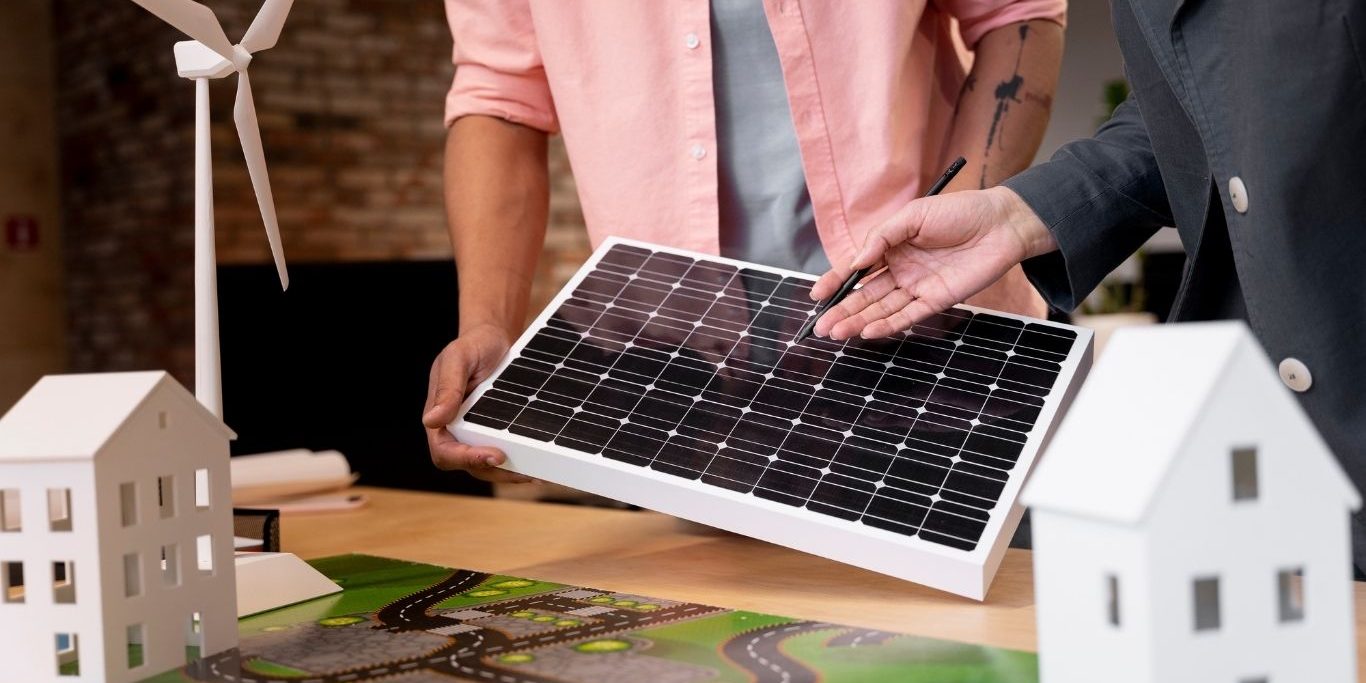
Solar photovoltaic energy is one of the most recognisable renewable energy technologies used in Spanish homes. Photovoltaic panels convert sunlight into electricity that can be used to power household appliances and other electrical equipment.
They can be installed on suitable roofs and, in some circumstances, incorporated into shared self-consumption arrangements. The electricity generated depends on factors such as solar exposure, panel orientation, shading and installation design.
For example, a detached house with a suitable roof may be able to generate part of its daytime electricity demand.
However, solar panels do not produce the same amount of electricity throughout the day or across every season. A property may still need electricity from the grid when its panels are not generating enough to meet demand.
Solar photovoltaic systems are therefore particularly relevant for households interested in producing some of their own electricity.
If you want to understand installation arrangements, surplus electricity and the relationship with the grid in greater detail, read our guide to solar self-consumption in Spain.
Solar thermal energy: using sunlight to heat water
Solar thermal energy is different from solar photovoltaic electricity. Instead of converting sunlight into electricity, solar thermal systems capture solar heat and transfer it to a fluid.
This heat can then be used to help provide domestic hot water and, in certain installations, support heating requirements.
For example, a household may use solar thermal collectors to reduce the amount of energy needed from its conventional water-heating system.
Solar thermal technology can be particularly relevant for properties with regular hot-water demand. However, the amount of heat available changes with sunlight and weather conditions.
For this reason, installations commonly include a suitable storage arrangement and an additional heating system when solar heat alone cannot meet demand. Solar thermal collectors should not be confused with photovoltaic panels, even though both use sunlight. The first provide useful heat, while the second generate electricity.
Spain’s Institute for Energy Diversification and Saving (IDAE) identifies solar thermal energy as an established renewable technology for meeting heating and hot-water needs in buildings.
Wind energy: can small turbines power a home?
Wind energy converts the movement of air into electricity using a wind turbine. Although large wind farms are familiar across Spain, smaller turbines can also be used in certain residential applications.
However, domestic wind energy is not suitable for every property. A small wind turbine needs appropriate wind conditions and sufficient space to operate effectively. Its performance depends on the local wind resource, the height and location of the turbine, and nearby obstacles such as buildings or trees.
A rural property with open surroundings may offer more favourable conditions than an apartment in a densely populated urban area. Even in a windy region, the actual suitability of a particular site needs to be assessed.
Wind turbines may also be subject to planning, structural, noise and other installation requirements. For these reasons, small-scale wind generation is generally a more specialised residential option than rooftop solar.
It can be relevant for some rural homes, but should not be assumed to provide reliable electricity simply because a property occasionally experiences strong winds.
Aerothermal energy: using heat from outdoor air
Aerothermal energy refers to thermal energy available in the surrounding air. An air-source heat pump can capture this energy and transfer it into a home for heating or domestic hot water.
Depending on the equipment, it may also provide cooling. The system uses electricity to operate, but much of the useful heat delivered can come from the surrounding environment. This makes heat pumps different from conventional electric resistance heaters, which convert electricity directly into heat.
The European Commission identifies heat pumps as an important technology for renewable heating and building decarbonisation.
For households, aerothermal systems can be relevant when replacing an existing heating or hot-water installation. They may also be considered during major renovations or when constructing a new home.
However, suitability depends on factors such as the building’s insulation, existing heating distribution system, climate and installation requirements.
A heat pump should therefore be selected according to the characteristics of the property rather than assuming that one system will perform equally well in every home.
Geothermal energy: using heat from the ground
Geothermal energy uses heat stored beneath the Earth’s surface.
In residential applications, shallow geothermal systems commonly work with ground-source heat pumps. These systems exchange heat with the ground to provide heating and, depending on their design, cooling or domestic hot water.
One advantage is that underground temperatures at suitable depths are generally more stable than outdoor air temperatures. This can provide favourable operating conditions for a correctly designed heat pump system.
However, geothermal installations usually require ground works, such as buried horizontal collectors or boreholes. This makes them more dependent on the property’s available land, geological conditions and installation budget.
For example, a detached house undergoing a major renovation may be able to consider geothermal heating.
By contrast, an individual apartment owner may have limited opportunities to install a separate ground-source system.
Geothermal energy is therefore a potentially useful residential option, but one that requires careful technical assessment.
Biomass energy: renewable heating from organic materials
Biomass energy comes from organic materials, including certain wood-based fuels.
In residential settings, biomass is commonly used for heating through equipment such as pellet stoves or biomass boilers. These systems release heat by burning suitable biomass fuel.
They may be relevant for some homes with substantial heating requirements, particularly where appropriate fuel supplies and storage space are available.
However, biomass differs from renewable technologies that do not involve combustion at the point of use. Burning biomass produces air pollutants, including particulate matter, and the environmental performance of a system depends on the fuel, equipment and operating conditions.
Fuel quality, maintenance and suitable emissions controls are therefore important. Households also need to consider practical requirements such as fuel deliveries, storage and ash removal.
Biomass should not automatically be described as pollution-free simply because its fuel comes from renewable biological resources. For some properties it may be an appropriate heating option, but it should be compared with other available technologies.
Can you use renewable energy without installing equipment at home?
Yes. A household does not necessarily need solar panels, a wind turbine or another generating system to access electricity associated with renewable energy sources.
In Spain, electricity generated by different technologies enters the interconnected electricity system. Households generally receive electricity through the same physical distribution network, regardless of their chosen supplier.
However, consumers can choose electricity products supported by renewable energy guarantees of origin. These guarantees are part of an official certification system that records the renewable origin of electricity generation.
They do not mean that only renewable electricity travels directly from a particular power plant to an individual property. Instead, they provide an accounting and certification mechanism for the renewable electricity attributed to the supply.
This distinction matters for residents who cannot install their own equipment. For example, someone renting an apartment or living in a building without a suitable roof may still be able to choose an electricity offer backed by renewable guarantees of origin.
It is therefore possible to participate in renewable electricity consumption without generating power on-site.
Which renewable energy source is best for your home in Spain?
There is no single renewable energy source that is suitable for every household. The most appropriate option depends on what the property needs energy for, its physical characteristics and the homeowner’s priorities.
A useful starting point is to identify whether your main objective is to generate electricity, produce hot water or provide heating and cooling.
| Household need | Renewable option to consider |
| Generate electricity on a suitable roof | Solar photovoltaic panels |
| Use sunlight to provide domestic hot water | Solar thermal collectors |
| Generate electricity at a suitable windy rural site | Small wind turbine |
| Provide heating, cooling or hot water | Air-source heat pump |
| Use ground heat for a suitable property | Ground-source heat pump |
| Heat a home using suitable organic fuel | Biomass heating |
| Access renewable electricity without installing equipment | Electricity supply backed by renewable guarantees of origin |
This comparison is a starting point rather than a ranking. For example, a home on the Costa del Sol may have different heating and cooling requirements from a property in the mountains of northern Spain.
Similarly, a detached house may have more installation options than a city apartment. The type of property, available space, local climate and existing equipment should all be considered before deciding.
Can different renewable energy sources work together?
Yes. A home can use more than one renewable energy technology, provided the systems are designed to work appropriately.
For example, a property might use solar photovoltaic panels to generate electricity and an air-source heat pump to provide heating and hot water.
Another household could use solar thermal collectors for hot water while continuing to purchase electricity through the grid.
These combinations serve different purposes and should be assessed according to the property’s needs. It is also important to distinguish renewable generation from energy storage.
A battery does not create renewable electricity. Instead, it stores electrical energy that has already been generated or purchased.
If you are considering storing electricity from solar panels, our article on batteries for solar power storage explains how this equipment works.
Combining technologies can offer benefits, but adding more equipment does not automatically make an installation more economical or suitable.
What should you consider before choosing a renewable energy system?
Before investing in renewable energy equipment, it is important to understand the property’s actual requirements.
Start by identifying whether you want to reduce electricity purchases, replace a heating system or cover part of your domestic hot-water demand.
Next, consider the physical characteristics of the home. Roof condition, available outdoor space, building layout and existing heating equipment can all affect what is technically possible.
Installation costs should also be compared with expected performance, maintenance requirements and useful life. A system that performs well in one property may not provide the same results elsewhere.
For apartments and shared buildings, ownership arrangements and permissions may also influence the available options.
Finally, it is worth consulting qualified professionals before making significant changes to electrical or heating installations.
Renewable energy is most useful when the selected technology addresses a genuine household need and is properly adapted to the building.
Frequently Asked Questions About Renewable Energy Sources for Homes
Can tenants install renewable energy equipment in a rented property?
Some installations may be possible, but tenants generally need to consider their rental agreement and obtain any required permission from the property owner. Equipment that modifies the building, electrical installation or heating system should not be installed without the appropriate authorisation.
Can apartment buildings share a renewable energy installation?
Yes. Spanish self-consumption regulations provide for collective self-consumption arrangements under specified conditions. This can allow eligible consumers to participate in a shared electricity-generating installation, subject to the applicable technical and administrative requirements.
Are renewable energy systems completely free from environmental impact?
No. Renewable energy technologies can reduce reliance on fossil fuels, but manufacturing equipment, extracting materials, construction, maintenance and eventual disposal can all have environmental impacts. These should be considered when comparing different technologies.
Do renewable energy installations increase a home’s property value?
They may influence a property’s attractiveness or value, but an increase is not guaranteed. The outcome depends on the local housing market, installation quality, operating costs, documentation and buyer preferences.
Can renewable energy systems operate during a power cut?
Not necessarily. Grid-connected generating systems may disconnect during an outage for safety reasons. Supplying electricity during a power cut requires an installation specifically designed and configured for that purpose. Having solar panels alone does not guarantee backup power.
Are government grants available for renewable energy installations in Spain?
Financial support may be available through national, regional or local schemes, but eligibility, funding and application periods vary. Homeowners should check the current conditions with the relevant administration before assuming that an installation qualifies for assistance.
Conclusion: understanding renewable energy options for your home
Renewable energy sources for homes include more than solar panels. Solar photovoltaic systems and small wind turbines can generate electricity, while solar thermal, aerothermal, geothermal and biomass technologies can help meet household heating or hot-water needs.
Each option has different advantages, limitations and installation requirements. For homeowners in Spain, the most appropriate solution depends on the property, local conditions and the type of energy required.
It is also possible to access electricity backed by renewable guarantees of origin without installing generating equipment.
At Evergreen Eléctrica, we help households in Spain understand their electricity supply options and make informed energy decisions.
Whether you are considering renewable technologies for your property or simply want to understand where your electricity comes from, knowing the available options is a useful first step.