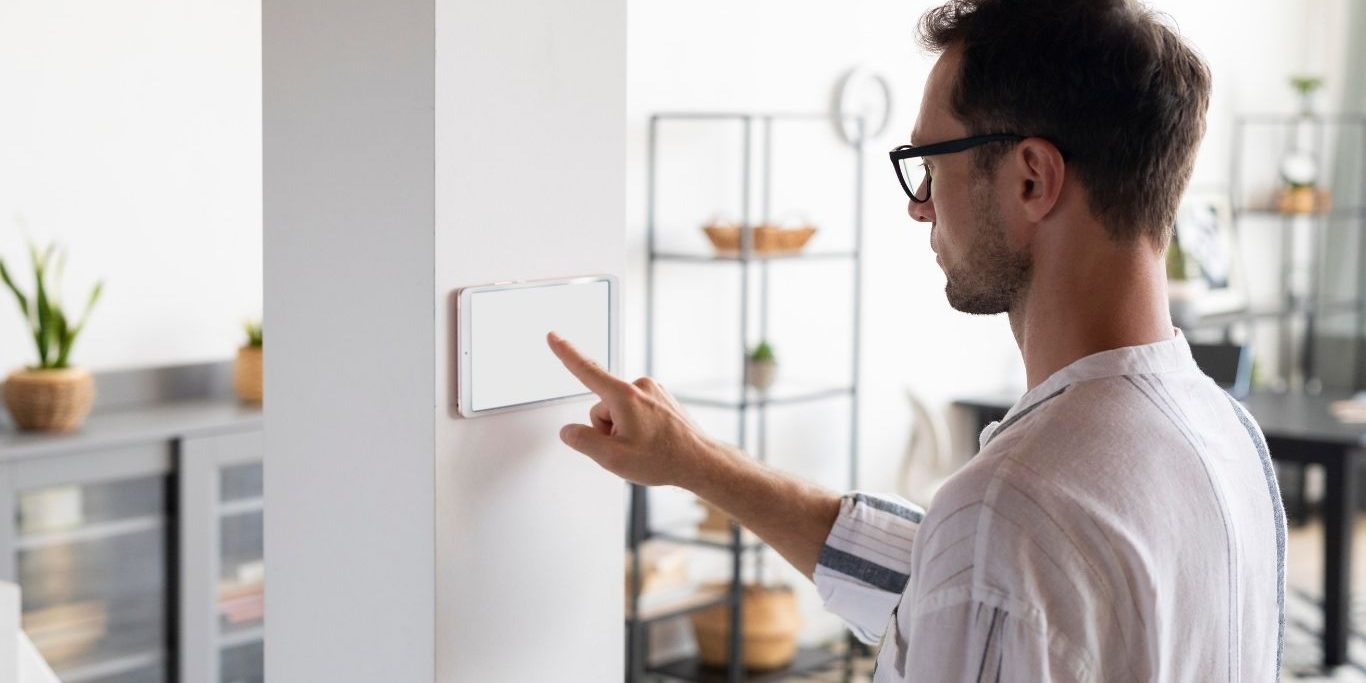
A smart home is not just about switching on the lights from your phone or asking a voice assistant to play music. Used correctly, smart technology can also help you understand how much energy your home consumes, identify unnecessary electricity use and automate everyday energy-saving decisions.
This is becoming increasingly relevant for households in Spain, particularly during periods when air conditioning, heating, pool equipment or other high-consumption appliances are used for several hours a day.
But buying more connected devices does not automatically make a home energy efficient. In fact, the real benefit comes from choosing technology that controls the appliances responsible for a significant part of your consumption.
So, which smart home devices can actually reduce energy consumption, and which ones are worth considering?
How can smart home technology reduce energy consumption?
Most households do not deliberately waste electricity. The problem is that it is difficult to notice exactly when energy is being wasted.
Perhaps the air conditioning continues running after everyone has left home. A pool pump operates for longer than necessary. Lights remain on in empty rooms. Or several appliances consume small amounts of electricity throughout the day even when they are not actively being used.
Smart home technology can help in three main ways: monitoring, automation and control.
- Monitoring shows you where and when electricity is being consumed.
- Automation allows devices to operate according to schedules or predefined conditions.
- Remote control lets you switch equipment on or off even when you are away from home.
The European Commission is also encouraging the development of energy-smart appliances capable of adjusting their electricity consumption according to factors such as consumer preferences or the availability of renewable electricity.
The important point is that smart technology does not save electricity simply because it is connected. It saves energy when it helps prevent unnecessary consumption or operate equipment more efficiently.
Smart thermostats and climate control
Heating and cooling should be one of the first areas to consider when trying to make a home smarter. A smart thermostat allows you to control temperatures, establish schedules and, depending on the system, automatically adjust climate control according to occupancy or household routines.
For example, there is little reason to keep an empty home at the same temperature you would choose while sitting in the living room. Smart controls can reduce heating or cooling when nobody is home and restore a comfortable temperature before residents return.
This can be particularly useful in Spain during the summer, when air conditioning can become a major source of household electricity consumption. There is real evidence behind this type of technology.
However, compatibility matters. Before buying a thermostat, check whether it works with your existing heating or air-conditioning system.
Smart plugs: useful for the right appliances
Smart plugs are among the easiest smart home devices to install. They sit between an electrical socket and an appliance and, depending on the model, can allow you to:
- Turn devices on and off remotely
- Create operating schedules
- Monitor electricity consumption
- Automatically switch equipment off
Their biggest advantage is visibility. A plug with energy monitoring can reveal how much electricity a particular appliance actually uses instead of leaving you to guess.
They can also be useful for equipment that does not need to operate continuously. Scheduling a device to switch off automatically can prevent unnecessary operating hours.
However, a smart plug should not be treated as a universal solution. Some high-power appliances require specific compatible devices, and equipment that must operate continuously should obviously not be disconnected simply to reduce consumption.
Smart lighting and motion sensors
Lighting is another simple area to automate. Smart bulbs and lighting systems can allow homeowners to control brightness, create schedules and switch lights off remotely. But some of the most useful energy-saving features are much simpler.
Motion and occupancy sensors can automatically switch lights off when a room is no longer being used. Timers can prevent exterior lighting from remaining active throughout the night. Smart routines can turn off several lights simultaneously when you leave home.
If you are replacing old lighting, efficiency should come before connectivity. A smart LED bulb combines the low electricity consumption and long lifespan of LED technology with additional control features. Buying a connected bulb without considering its underlying efficiency misses the main objective.
Smart appliances and flexible electricity consumption
The next generation of connected homes goes beyond remotely switching appliances on and off. Some smart washing machines, dishwashers, heat pumps and other appliances can be programmed to operate at particular times.
This becomes especially interesting when combined with electricity tariffs that vary according to the time of consumption or with a solar installation. Imagine that your dishwasher needs to finish before 7 a.m. Instead of starting immediately, a smart system could schedule the cycle for a more convenient period.
The European Commission identifies this type of flexibility as one of the advantages of Energy Smart Appliances. Compatible appliances can adjust when they use electricity while still completing the task requested by the consumer.
For homeowners, this introduces an important distinction: reducing your electricity bill and reducing your electricity consumption are not always exactly the same thing.
Moving an appliance to a cheaper period may lower the cost without changing the number of kWh it consumes. Switching it off when unnecessary, however, reduces consumption itself. A good smart home strategy can help with both.
Energy monitors: understand before you automate
One of the most useful energy-saving tools may be the one that does not control anything at all. Home energy monitors provide information about electricity consumption, helping you identify patterns and unusual demand.
This can reveal questions such as:
- Why does consumption remain high when nobody is home?
- Which appliances are responsible for overnight demand?
- Why has electricity use suddenly increased?
- Is the pool equipment operating for longer than expected?
Before spending money on multiple smart devices, understanding these patterns can help determine where automation will actually make a difference.
Spanish households already have an advantage here. Smart electricity meters are widespread across the country, and consumers can access hourly consumption information through their electricity distributor. That makes your consumption history a very good place to start.
Smart blinds and shutters can also help
Not every energy-saving smart device needs to be connected directly to an electrical appliance. Automated blinds and shutters can help manage solar heat entering the property.
During hot Spanish summers, closing shutters or blinds during periods of intense sunlight can help limit heat gain. In winter, intelligent management can be used differently depending on the orientation of the property and weather conditions.
The benefit is indirect: the blinds are not reducing electricity consumption themselves. Instead, they can reduce the amount of work required from heating or cooling systems.
For homes in warmer parts of Spain, combining passive measures such as shading with efficient climate control can be more effective than relying exclusively on air conditioning.
What about standby consumption?
Televisions, consoles, printers, speakers and other connected devices may continue consuming electricity when they appear to be inactive. For one modern device, the amount can be small. Across an entire home and over a full year, however, unnecessary standby consumption can add up.
European Ecodesign rules place strict limits on standby and off-mode electricity consumption for a wide range of products. The European Commission estimates that measures regulating standby consumption will deliver substantial electricity savings across EU households.
Smart power strips and plugs can help disconnect selected equipment when it is genuinely not needed. There is an important caveat: smart devices themselves also consume electricity because many remain connected to Wi-Fi or another network.
Therefore, installing ten connected devices to eliminate a tiny standby load is not necessarily an efficient strategy. Focus first on meaningful consumption.
Smart home technology and solar panels
Smart energy management becomes particularly interesting in homes with solar self-consumption. Solar panels produce electricity during daylight hours, while household demand may occur at different times.
Automation can help align the two. For example, depending on the installation and equipment, a household could schedule:
- A dishwasher during solar production hours
- A washing machine around midday
- Pool filtration when photovoltaic production is high
- Electric vehicle charging according to available solar generation
- Climate control to make better use of daytime solar production
This can increase the amount of solar electricity consumed directly inside the property rather than exported to the grid. For homeowners considering photovoltaic energy, therefore, the question is not only how much electricity your panels can generate, but also how effectively your home can use that production.
Which smart home devices should you buy first?
You do not need to turn your entire property into a smart home overnight. Start with the areas responsible for meaningful consumption.
- For a home with significant air-conditioning use, smarter climate control may deliver more value than connected lighting.
- For a property with a swimming pool, improving pump schedules could be more relevant.
- For an EV owner, smart charging may be the priority.
And if you do not know where the electricity is going, monitoring should come before automation. This is particularly important when buying new appliances. The European Commission estimates that EU Ecodesign and Energy Labelling measures saved the average EU household almost €320 on energy bills in 2024, illustrating why the underlying efficiency of a product remains important regardless of how “smart” it is.
In other words, don’t buy a device simply because it has an app. Choose it because it solves a real energy problem in your home.
Conclusion
Smart home technology can be a valuable tool for reducing energy consumption, but the key is choosing devices that respond to the way your home actually uses electricity.
Rather than adding connected technology everywhere, start by identifying your biggest sources of consumption. Smart climate control, energy monitoring, automated pool equipment, smart EV charging or appliances programmed around solar production can often have a greater impact than simply installing more connected devices.
For homeowners in Spain, combining energy-efficient appliances, smart controls, consumption monitoring and solar self-consumption can create a home that uses electricity more efficiently while also making everyday energy management easier.
Ultimately, a truly smart home is not the one with the most technology. It is the one that uses energy intelligently.
At Evergreen Eléctrica, we help homeowners understand their electricity consumption and identify practical ways to improve energy efficiency. From optimising your electricity contract to exploring solar self-consumption and other energy solutions, our team can help you find the right approach for your home in Spain.